
Many critics have already aptly reviewed BULBBUL, so I will instead try to review the design and lifestyle elements used to display what was needed to be shown in the movie.
Instead of focusing on plot or performance, I want to explore how Bulbbul uses design, color, and lifestyle elements to portray its feminist and supernatural themes, showing the journey of a woman navigating power, oppression, and transformation in early 20th-century Bengal.
Introduction: Illustrative Brilliance

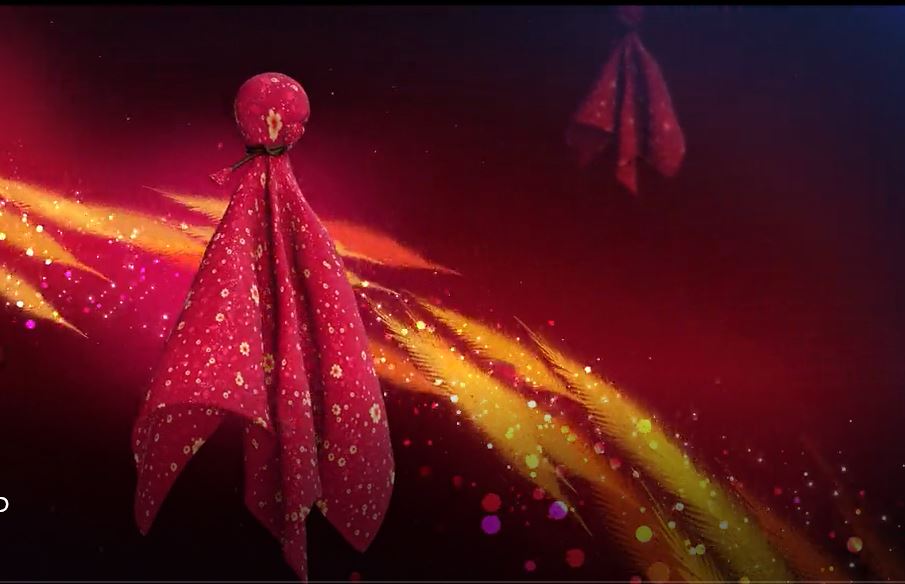
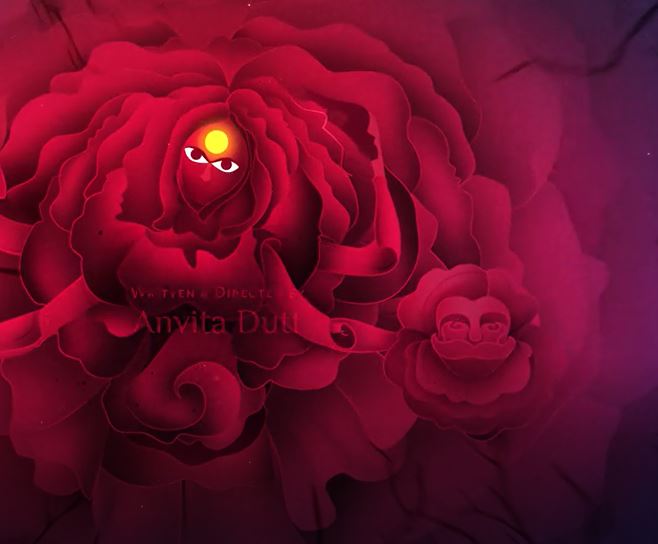
In the beginning, a vivid kaleidoscope of vibrant yet dark illustrated animations introduces the cast, directors and producers. The color chosen for these illustrations are hues and shades of red. Red in itself is a color of love, strength, power, danger and blood and hold religious significance in Hinduism. It is then fused with the shades and tints of Purple which again reflect power and mysticism. The combination and fusion of these two bold colors display possibly every emotion of significance in this movie. The animation shows the blooming of roses and then wilting of trees. It might signify in a very non obvious way the coming of age of the protagonist and her realization with the cruelty of real world which makes her then lose her innocence. Also, the illustrations inculcate the traditional Bengali motif and fish motif and thus the movie even before beginning, reinstates where the movie is situated.
Childhood, skies and the lush greens
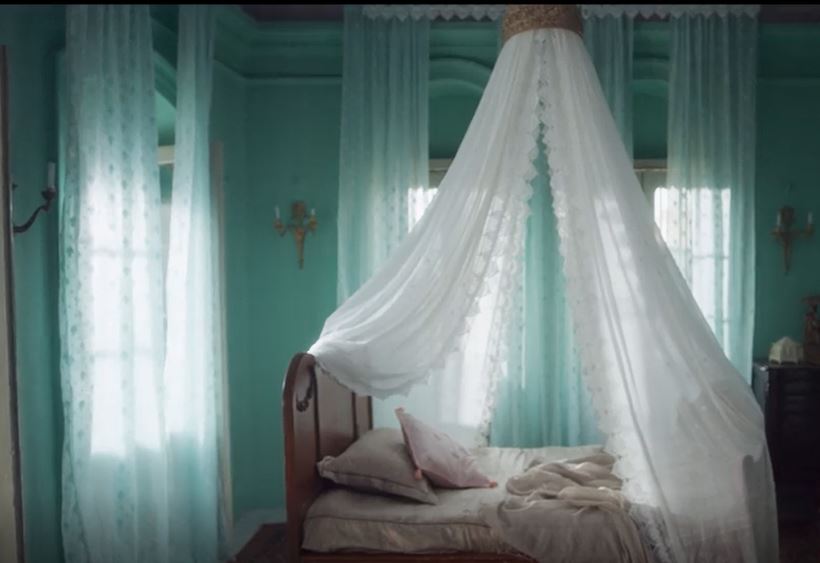
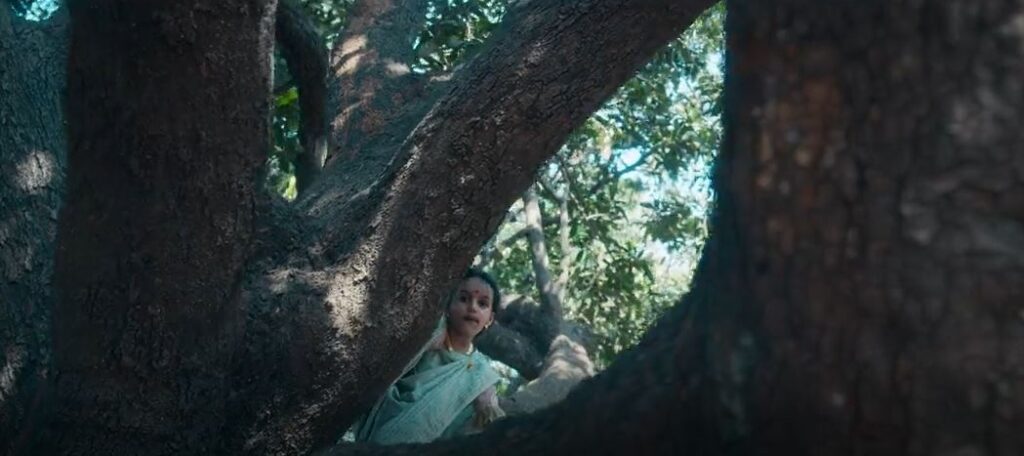
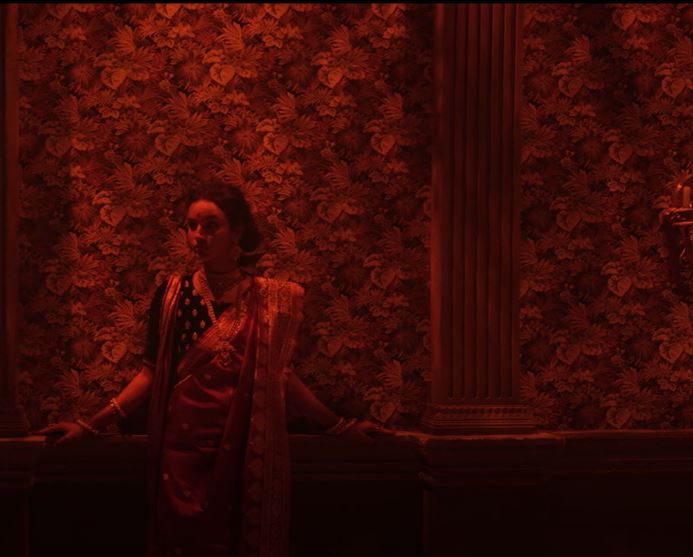
Coming to the first part of the film, the scene is shown at the protagonist’s maternal home. The use of white and sky blue for the majority of the walls and the lush greens display both the innocence and happiness of her childhood. The entire scene is designed to sooth you even though its showing something as grave as child marriage. We are then shown the child ‘bulbbul’ who is literally on the trees. The name directly emphasizes on our mind that the protagonist finds both fun and comfort on the trees. Also, even in the background we can see that the walls all have a wall art of leaves and bushes and flowers in velvet which is not made obvious to us until the protagonist takes hold of the reins of her ‘haveli’. It is only when we see her in power is when we notice that her home is reflecting trees, leaves and similar natural element where she was the most of herself.
Marking Time Through Props and Design
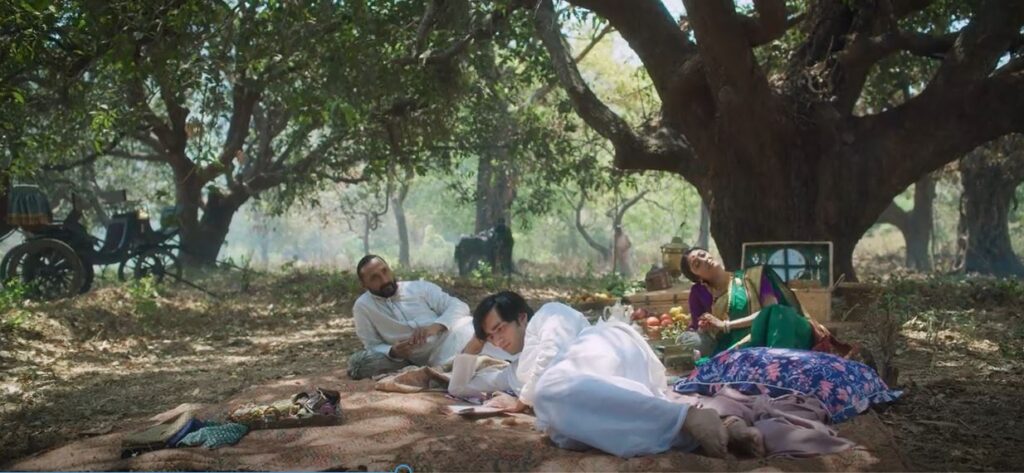
Cut to the 20 years later scene. The differences in modes of transportation is used to differentiate between the childhood and adulthood of lead characters. The vehicles that earlier brought Bulbbul and then later is shown bringing Satya show the difference in times. The change is time is also shown through colors. The grave realities of adulthood that were faced by the protagonist indicate their presence even before their revealing. The colors, weather, and atmosphere are all used to indicate the stark difference between what was and what is.
British Raj and Bengal : Staging the set
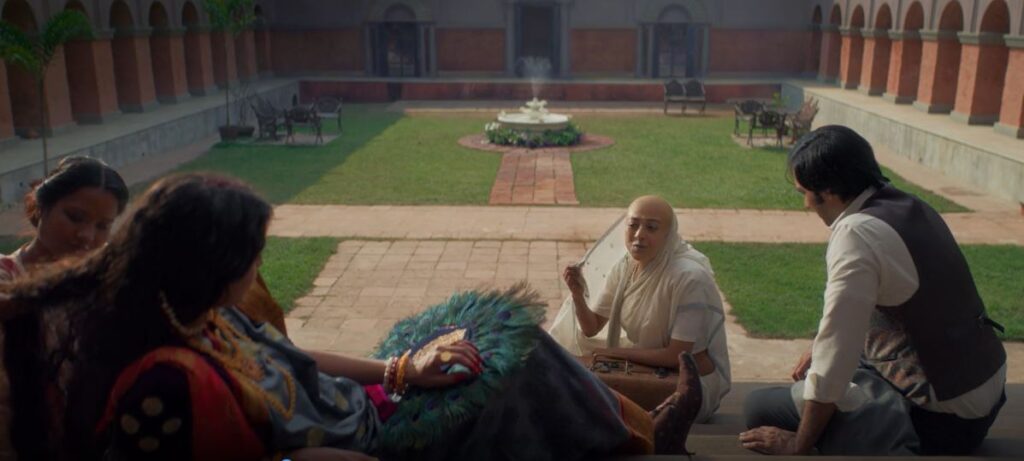
Bengal has always had a strong character of its own, so much so that it can almost be personified. The traditions, language, culture, history, art, music, accessories, lifestyle, and the overall existence of the region can be penned down, painted or portrayed distinctly. It is much more than just ‘rosho gulla’ and the Howrah Bridge. This very fact is brought to our notice in this movie. The notion that even after almost a hundred years, the British Raj is blending in but has not yet seeped inside and rooted in the Bengali culture is what is displayed excellently in every scene of BULBBUL. For the most obvious example, Satya Thakur is shown completely dressed as the European lords, lighting cigars and carrying guns like the ‘sahabs’ from Europe, but still feels the need for the protagonist to take a drape or ‘parda’ while seeing other men, thus showing the selective adaptation of Western culture. Also, in one scene, Indraneel, who himself wears traditional Bengali attire, is seen commenting on Bulbul, insisting that she wear shoes; this is again a seeping in of cultural changes, a result of the company raj.
Jewellery as a means of expression:
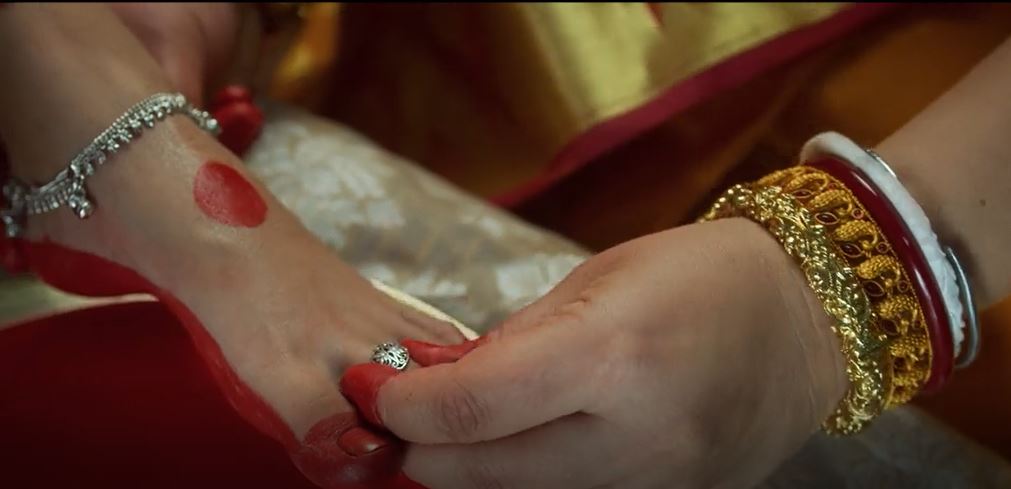
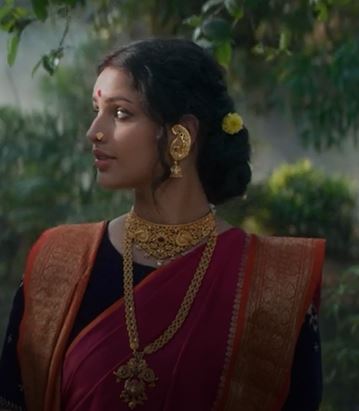
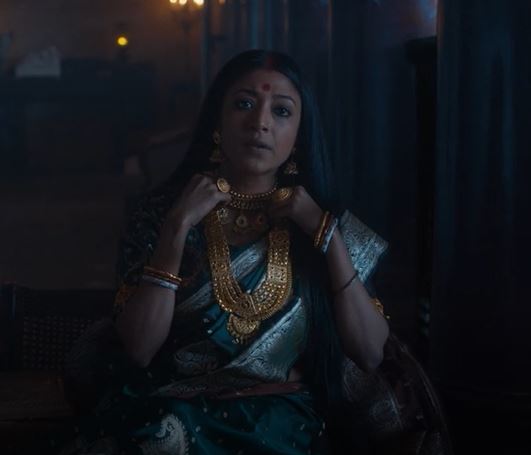
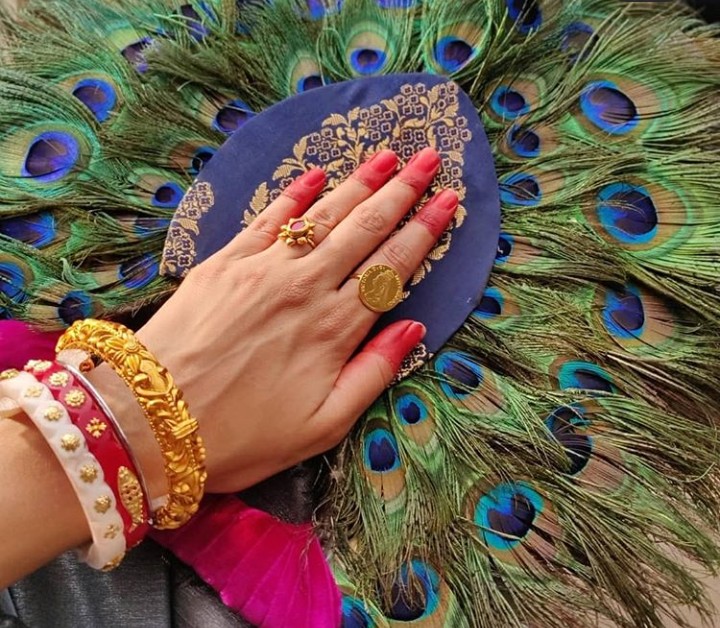
The use of symbolism is not just limited to trees. There are hints hidden even in the protagonist’s jewellery. The heavy temple jewellery worn by the grown up Bulbbul is very different from her adornings as a naive young girl. The use of jewellery is shown as a symbol of power which is very typical to their Indian characters. Its almost like we realize that Bulbbul has understood the importance of what she holds. The jewellery, especially the earrings draw a thread, a very thin and obvious thread to the Hindu Goddess and in one brief moment hints of what might be. The jewellery is also used to lay barren the reality that jewellery for an Indian married woman has always been the golden chains which cage her dreams, wishes and aspirations which are one by one slaughtered by the restrictions and ill treatments forced upon her. Signifying the toe ring as an ornament to keep a female from flying away and its loosening hence meaning a comment on the over enthusiasm of the protagonist highlighted the age-old association of jewellery as a shackle for women. Jewellery and/or wealth is also shown as a bate to rope in a woman, forcefully marrying her to a mentally disturbed man.
Attires as an expression:
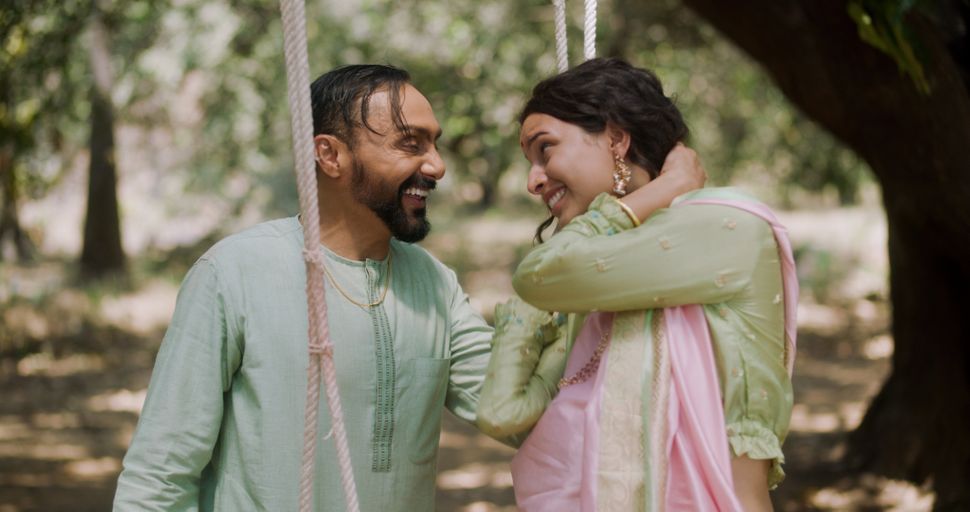
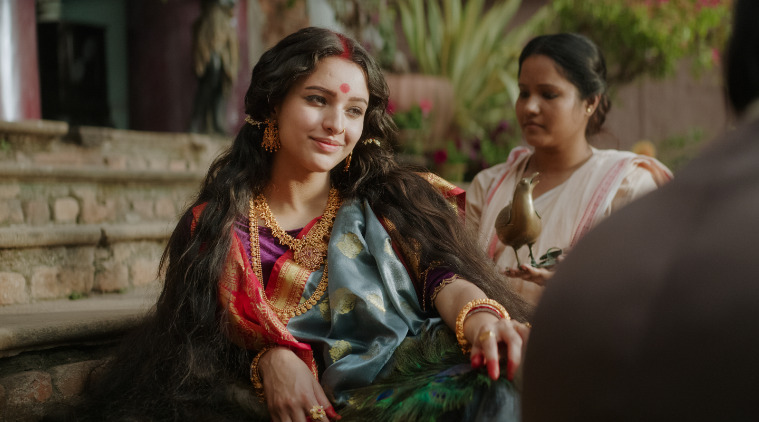
Attires are successfully used to display the change in characters. From the protagonist’s transition from wearing soft pale colors like yellow and baby pink hues pointing at her innocence to her wearing power asserting colors like red, purple and shades of grey to Satya’s attire shifting from the comfortable cottons to royal red velvet as if to exert the assurance of being able to handle responsibility and power both, the clothing is used as tool to bring in effect what the character wants to portray. The protagonist wearing Grey which is as such a very neutral color but is taken as a symbolic color for the Goddess Kali. Since in those times black was considered inauspicious, it would not be acceptable for the lady of the house to dress in black, still the color is used by raising the tones and hence the use of grey. The silk and cotton of Bengal is used to the best possible display.
Lifestyle Accessories as a display of status:
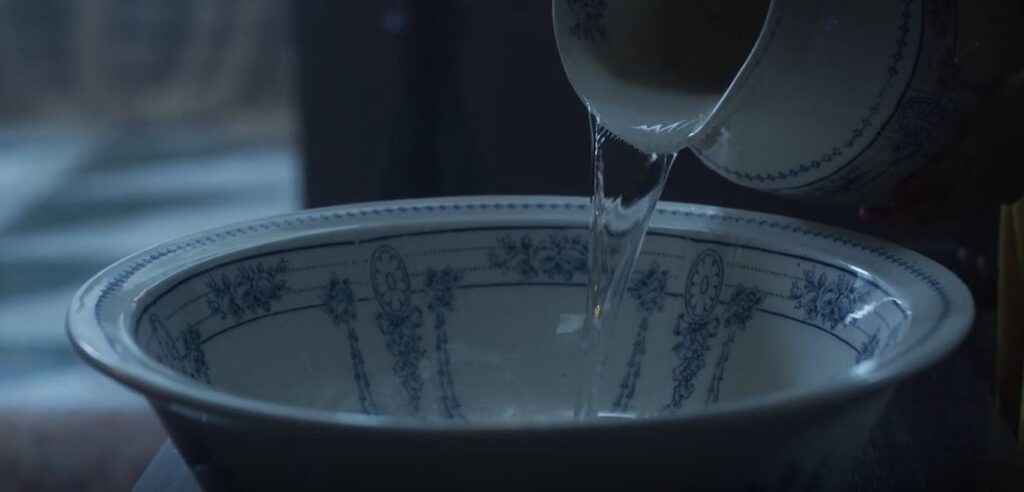
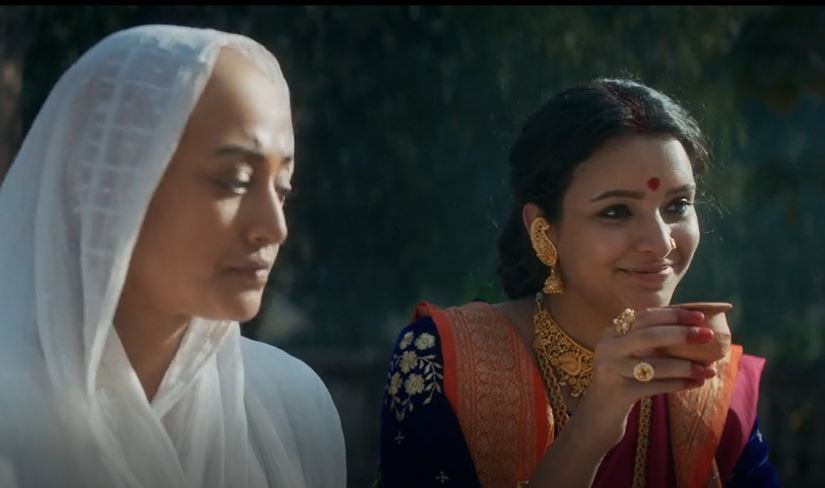
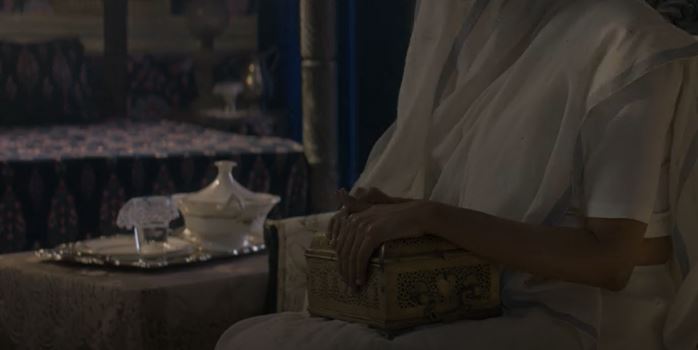
Ceramics, textiles, architecture, and interiors all help us understand the status of the protagonist and her family. The shift from ceramic crockery to glass ones shows the difference in times gradually. The fact that married women in big mansions relished beverages in ceramic and glass while widows still used the mud tumblers again showed the importance of materials in the display of status and lifestyle. The elaborate sets, the grandeur of mansions, the chandeliers, the candle stands, the glorious velvet wallpapers, all are used to imply the royalty of the unclaimed royals, “the zameendars”. The use of architecture to signify the focused family as superior to the rest of the village is an important statement for the film, as this showcases the similarity in assaults on women despite their differences in their economic status, almost screaming that the wealthier ones might have their birdcage a little more comfortable than poorer ones, but they all are in cages nonetheless.
These were just some of the points that I noticed. It is possible that I might have lost a lot of key points, though I have tried to capture as many as I could. Rest I found the movie very appealing and a fun supernatural feminist orientation.