
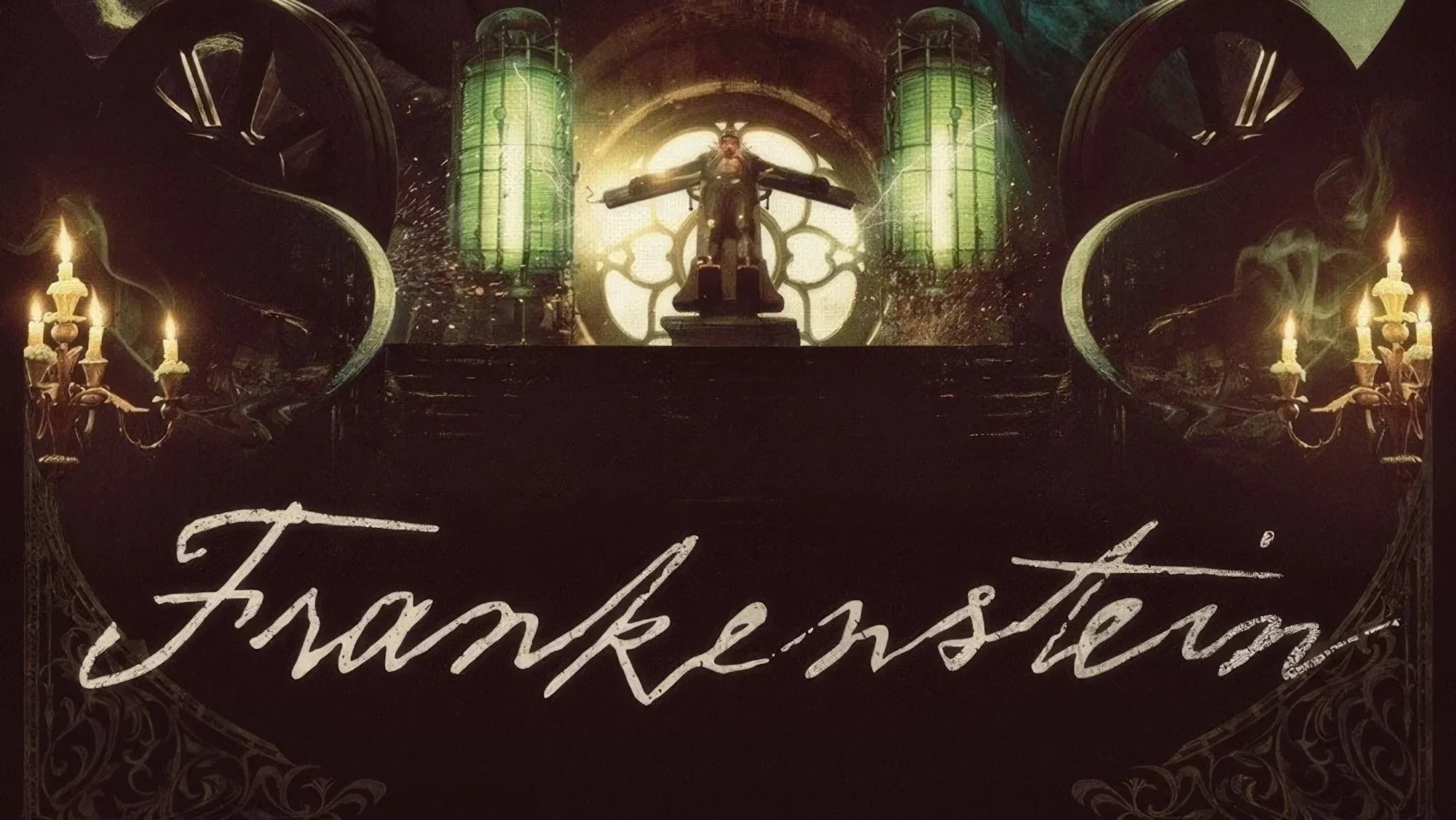
Nobody can deny the haunting effect of a classic novel, which is turned into a well-made movie that leaves you with a trail of thoughts. That is the effect Frankenstein has on you. With a subtle departure from the original text and a bigger nod to the underlying themes, it compels us to pause and reflect on humanity, cruelty, God and monsters, and the Purposefulness of death. It is not archaic, and lacks depth and logic in some places, but no one can deny how visually and magnanimously gothic its beauty is. But how instrumental design and aesthetics were in resurrecting this gothic tale by Mary Shelly. Let’s find out.
The story
A surgeon haunted by his own childhood trauma goes against God and Death to create a being that defies death to prove to the world that he simply can, but then finds it grotesque and stupid and feels it is ungodly for the creature to exist. This is the basic storyline of the movie. But what really makes it worth seeing is how love and nurture can help in growing the intelligence of a being and how, at the core, it all, being a human is asking to be loved and cherished. It is shown through the relationship between a father and son through different generations. (Personal comment) I loved the angle where the female lead of the movie is shown to be more intelligent and emotionally adept than any of the men in the movie.
The Era
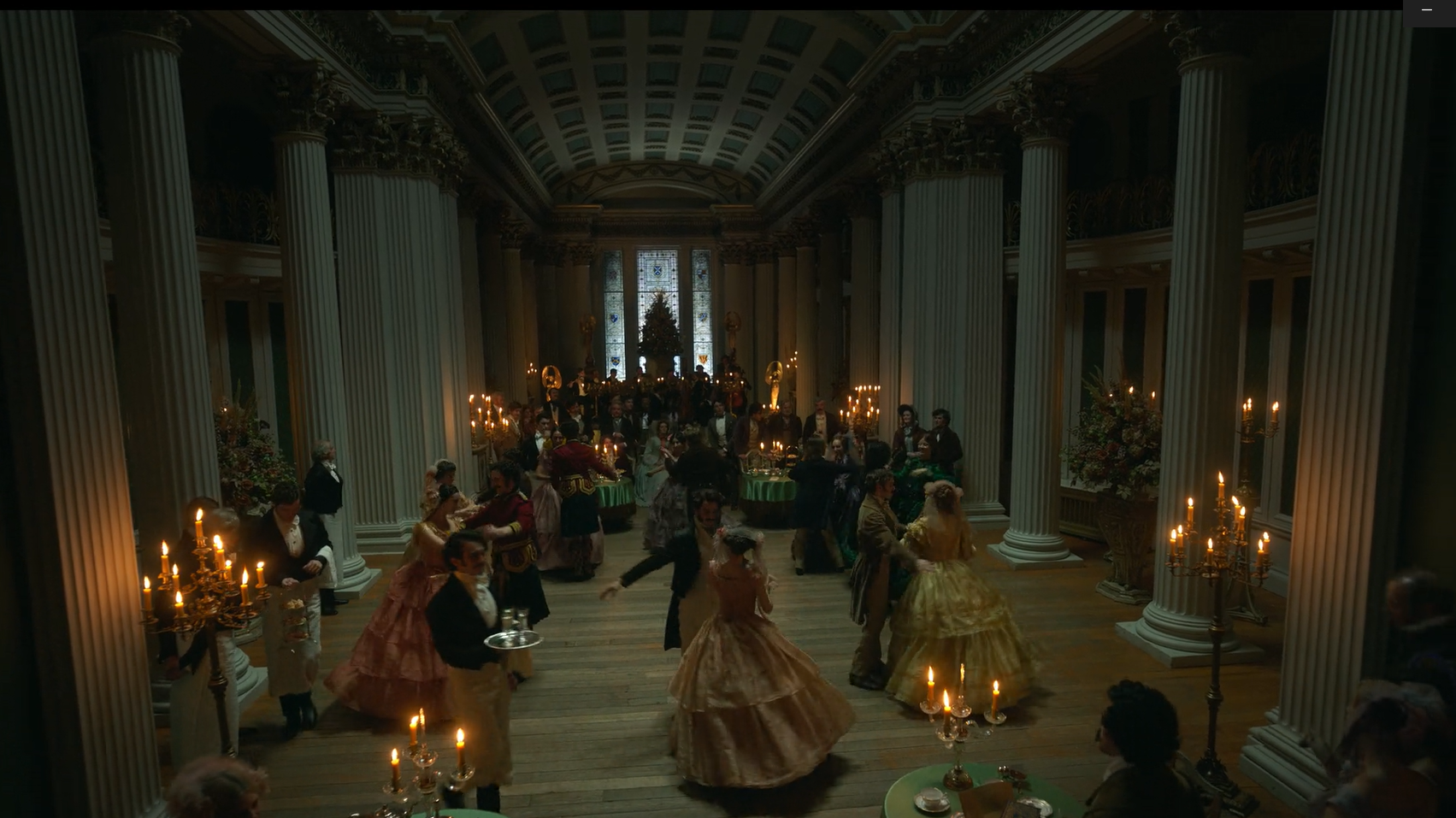
Although the film has been set in the 19th century, Director Guillermo Del Toro bends historic accuracy and rigidity and uses hyperbole to instead show the dawn of a new modern age taking shape within that era. Using the cadavers from the Crimean War, elaborate horse carts, grand manors typical to the Victorian period, Veiled hats of Elizabeth, all adduce to the setting being in the latter half of the 19th century. While Victor’s clothes, flair, and much of the equipment shown in the movie are much more modern as compared to those times.
ANATOMY as a character
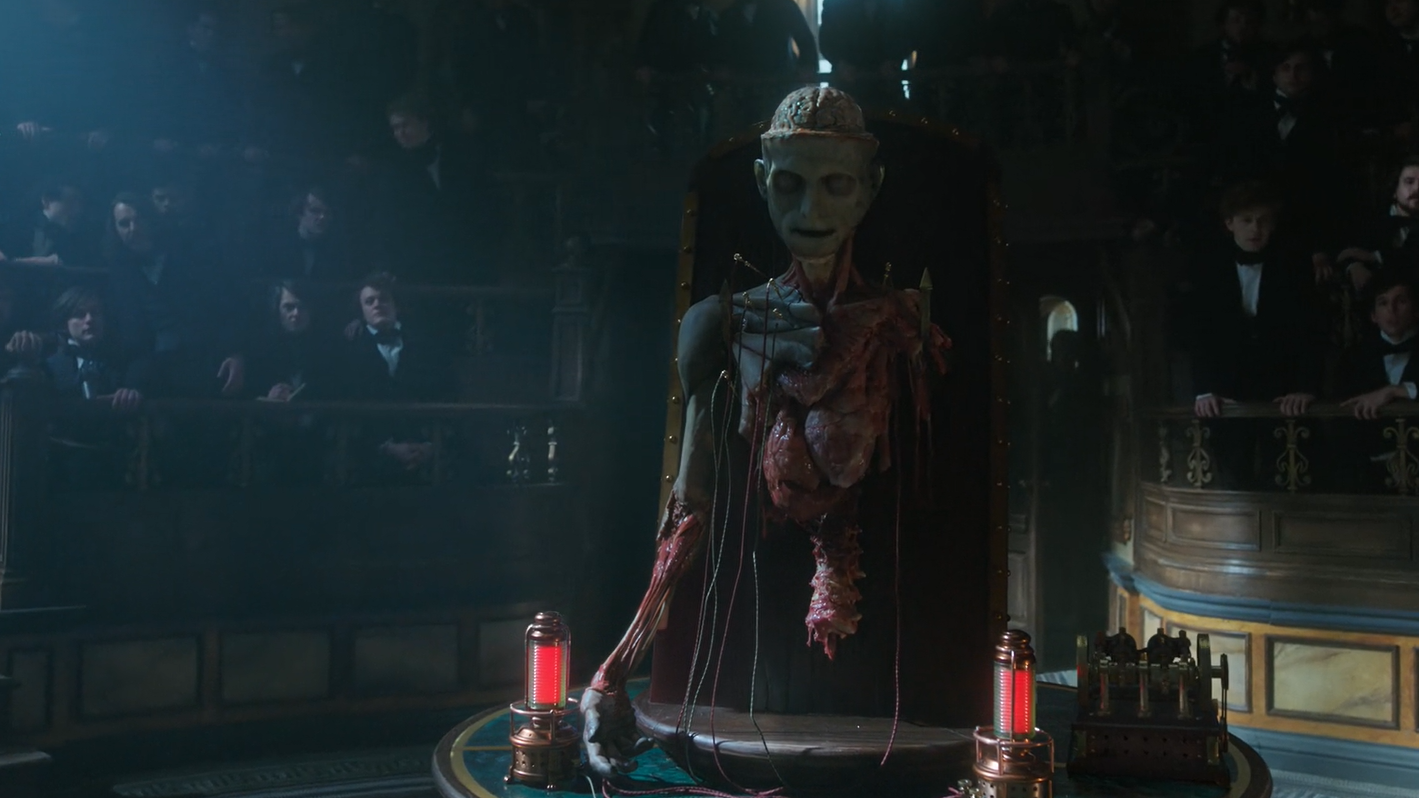
The central nervous system of the entire concept, not just the movie but the novel as well, is Anatomy.. This comes from the fact that the 18th & 19th centuries were a boom for anatomical study. By the 19th century, medical colleges were established across the globe. Europe had dozens, America had several, and anatomy was a core subject in all of them. The main principles of cell theory were established in 1838-1839 by Matthias Schleiden and Theodor Schwann. Before the 19th century, surgery was often a craft associated with barbers or manual workers. But this period transformed surgeons into medical scientists. With the advent of anesthesia, antisepsis, and anatomical knowledge, surgery evolved from a crude, fast procedure into a disciplined, research-backed medical specialty. Surgeons now relied on scientific principles, sterile environments, and anatomical precision rather than speed and bravado. Mary Shelly was in the midst of an era dedicated to science and modern medicine.
Anatomy theaters were the privileged and original place for teaching anatomy in Europe at the beginning of the 15th century. Modern surgery was born from the progress accomplished in these theaters. This was a major element as Victor displayed his brilliance by bringing his half-dead instrument to life for a moment.
Del Toro brings anatomy to life in Frankenstein, so much so that anatomy in itself becomes a character. Everything revolves around it. If you look closely, it can be spotted in the coffins, in the still life Herlander was trying to paint, in the costumes worn by Elizabeth. Anatomy becomes the very soul of the movie. And we may find out that there are very subtle elements of the human body, like veins, bones, and skeletons, which are shown through different elements of design.
The Architecture
The buildings, mansions, and towers shown in the movie all show Victor’s mental frame. Victor’s ancestral home, which is shot across different mansions and locations, had elements of angels, gods, and huge paintings showing heaven. Since Victor lived with his mum, it was like his sweet haven. The dominant colour, red, appears everywhere: in the furniture, the food, and even subtly within the marble that lines the staircase and walls. Look closely and you’ll notice delicate red veining in the stone, almost like bloodlines running through the house itself. The furniture, too, shows faces and heads, which aligns with the running theme of anatomy.
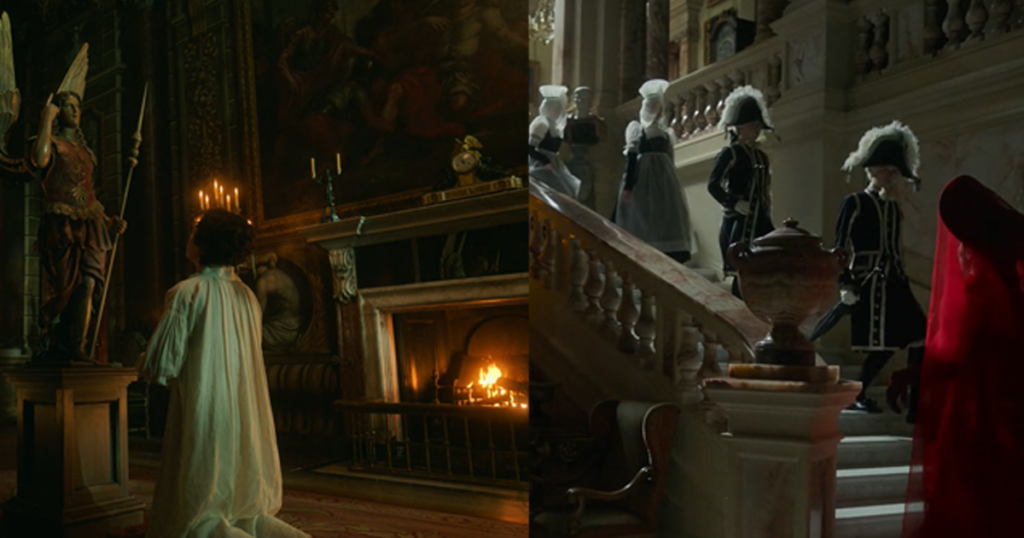
On careful observation, you’ll notice subtle moments of foreshadowing throughout the film. Victor’s home, for instance, is adorned with enormous statues of crucified angels- a visual hint toward the fate of Frankenstein’s creature, who, like an angel cast down, is born innocent yet condemned by the world around him.
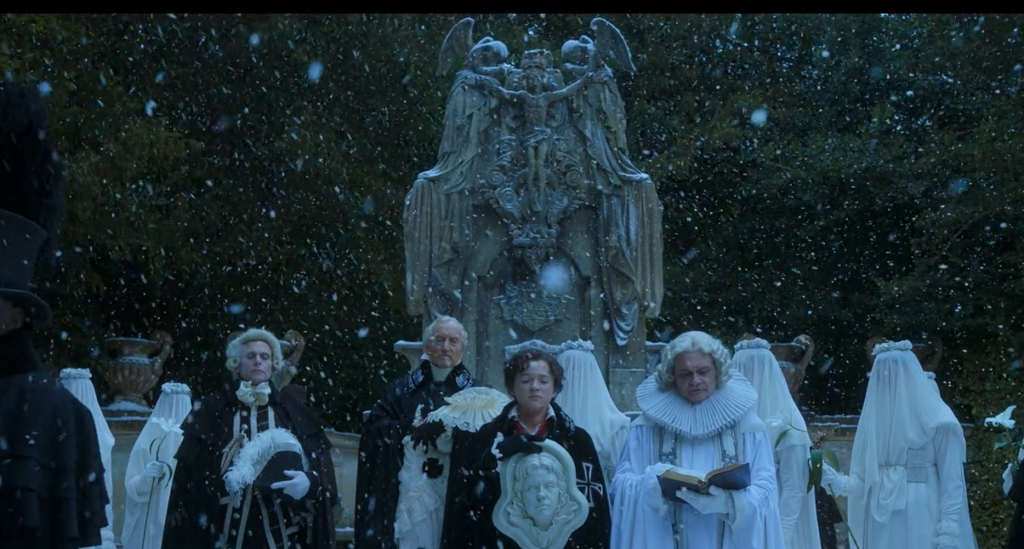
Herlander’s home, on the other hand, breathes with life and youth. He tries to capture vitality through the walls, the paintings, the photographs; all silently indicating his desire to hold time in his fist, to freeze the moments he knows are slipping away. Also, perhaps because it was where Elizabeth appears. Since she was full of empathy, love, and a sense of caring for the smallest of beings, her presence is shown through open and lighted rooms.
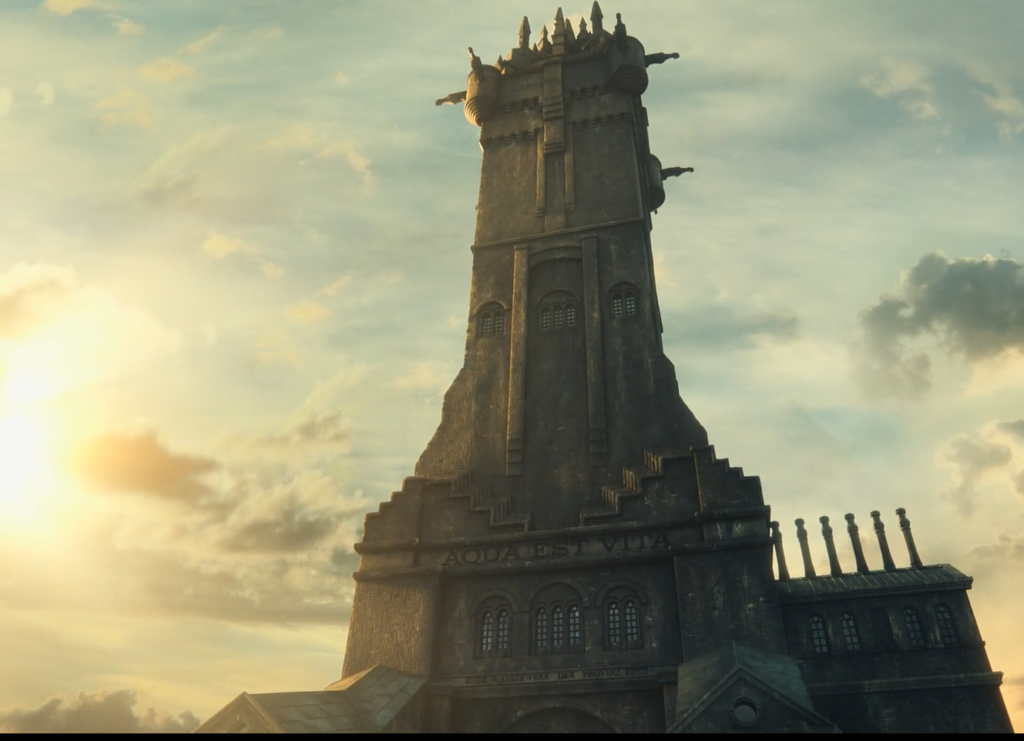
The TOWER stands as the architectural lodestone in the films. It had a very sinister antagonist energy. It mirrored Victor’s ambitions. It was as tall and grotesque as Victor was ambitious and ruthless. As Victor becomes increasingly single-minded and ruthless in his pursuit, the tower rises with the same merciless intent. Every jagged edge and shadowed crevice suggests a structure built not for shelter, but for something clandestine, forbidden, and unmistakably malicious. Production designer Tamara Deverell says, “You’ll see a lot of circle motifs, which, to Guillermo, represent the circle of life, the beginning, the end, the endless ouroboros, the snake eating its tail,”[TUDUM]. The windows, the workspace, even the hauntingly scary fenceless, bottomless pit, all are shown to be circular.
The costumes
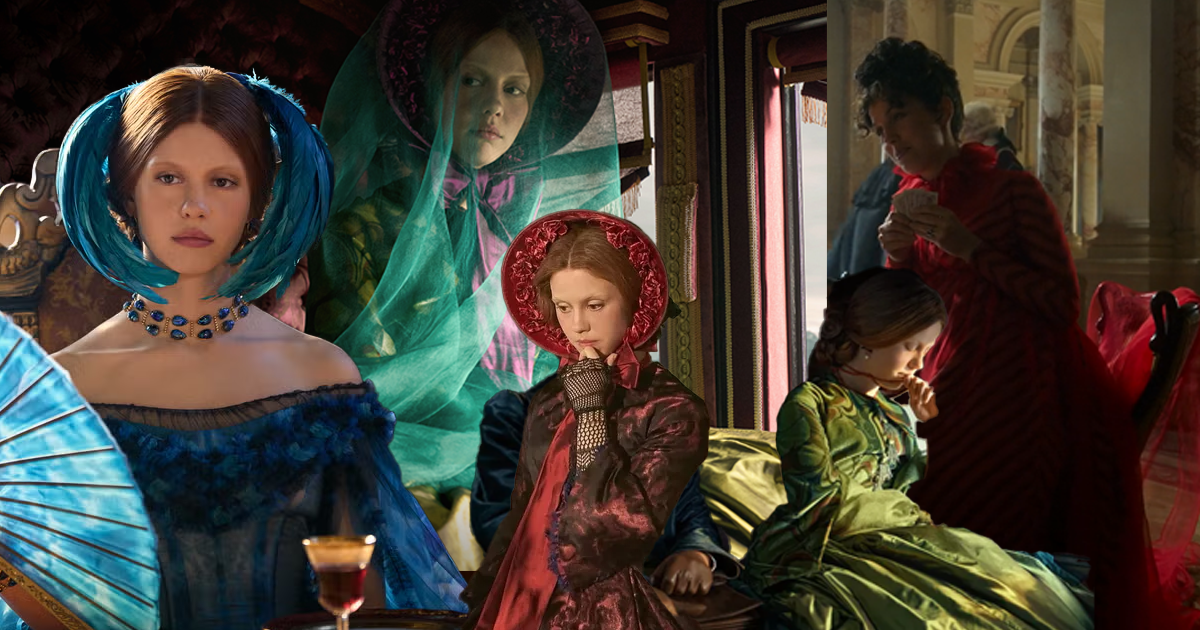
THEY FOLLOWED THE TIMELINE! My heart was so relieved because who does it anymore? Who sticks to the era the costumes should belong to, and yet Kate Hawley did, and ahoy! Look at the brilliance she has created. The silhouette, the rounded shoulders and bust, the flare, oh my happy heart! But what catches your eye specifically are the bonnets! The bountiful, accurately shaped bonnets with colours that do the film poetic justice, and THE COLOURS are used in such a manner that they help set the tones for the characters.
For instance, all the colours that Elizabeth wears are cool colours but yet bold and bring out her warmth as if they say that she is a sweetheart for the little beings, but is fierce and opinionated in what she believes in.
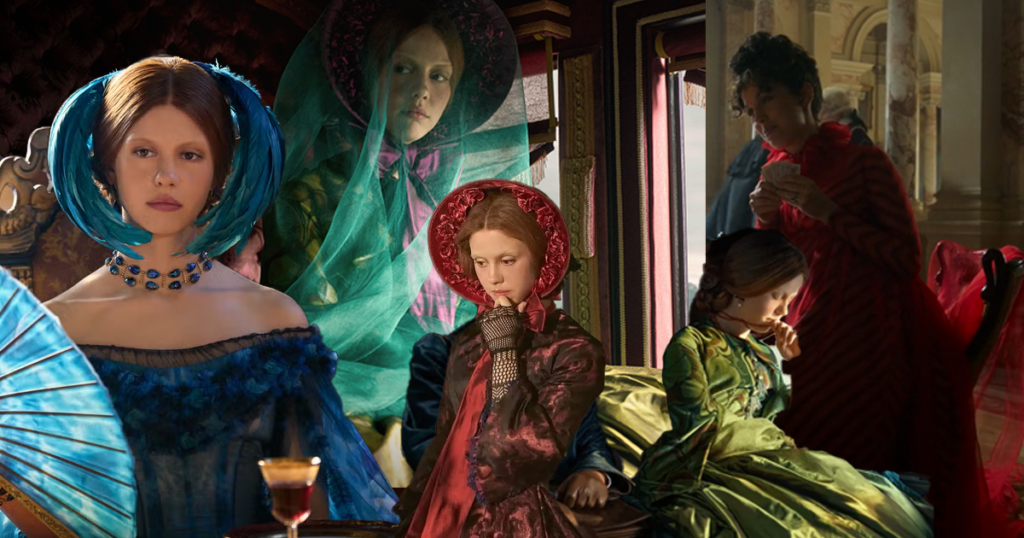
Also ANATOMY. That is not missed in the costumes. Elizabeth’s gown’s lacing shows the structure of the vertebral column, which is where Victor inserted his pins, making the creature come alive. Also, observe closely, and you will see the spine is what is visible in the coats Frankenstein wears. The embroidery on Victor’s shirt shows veins. Victor’s mom’s dress has patterns that make it look like muscles and flesh. Again, Elizabeth’s corset somewhat appears like a ribcage. I can go on and on and on about the way costumes have been used for symbolism in the movie.
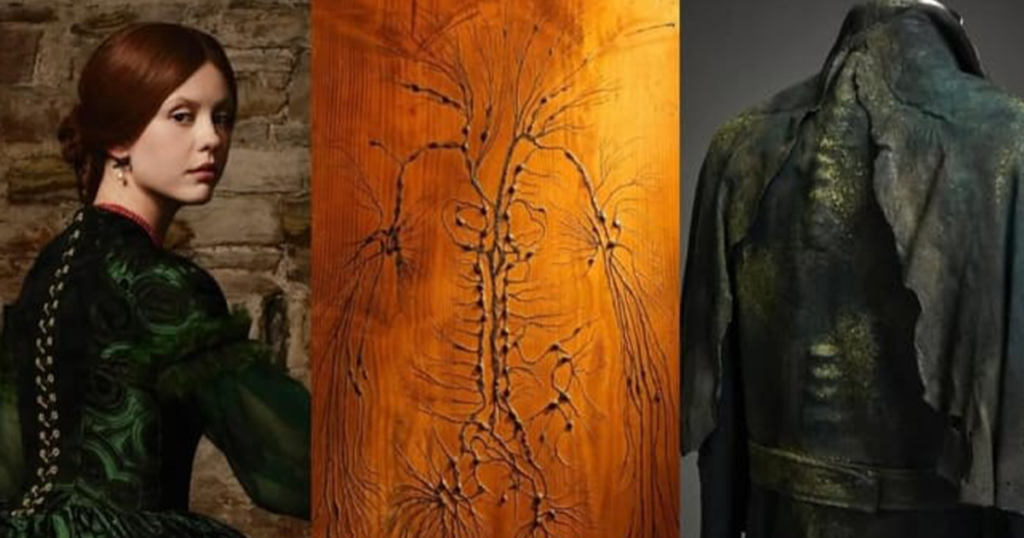
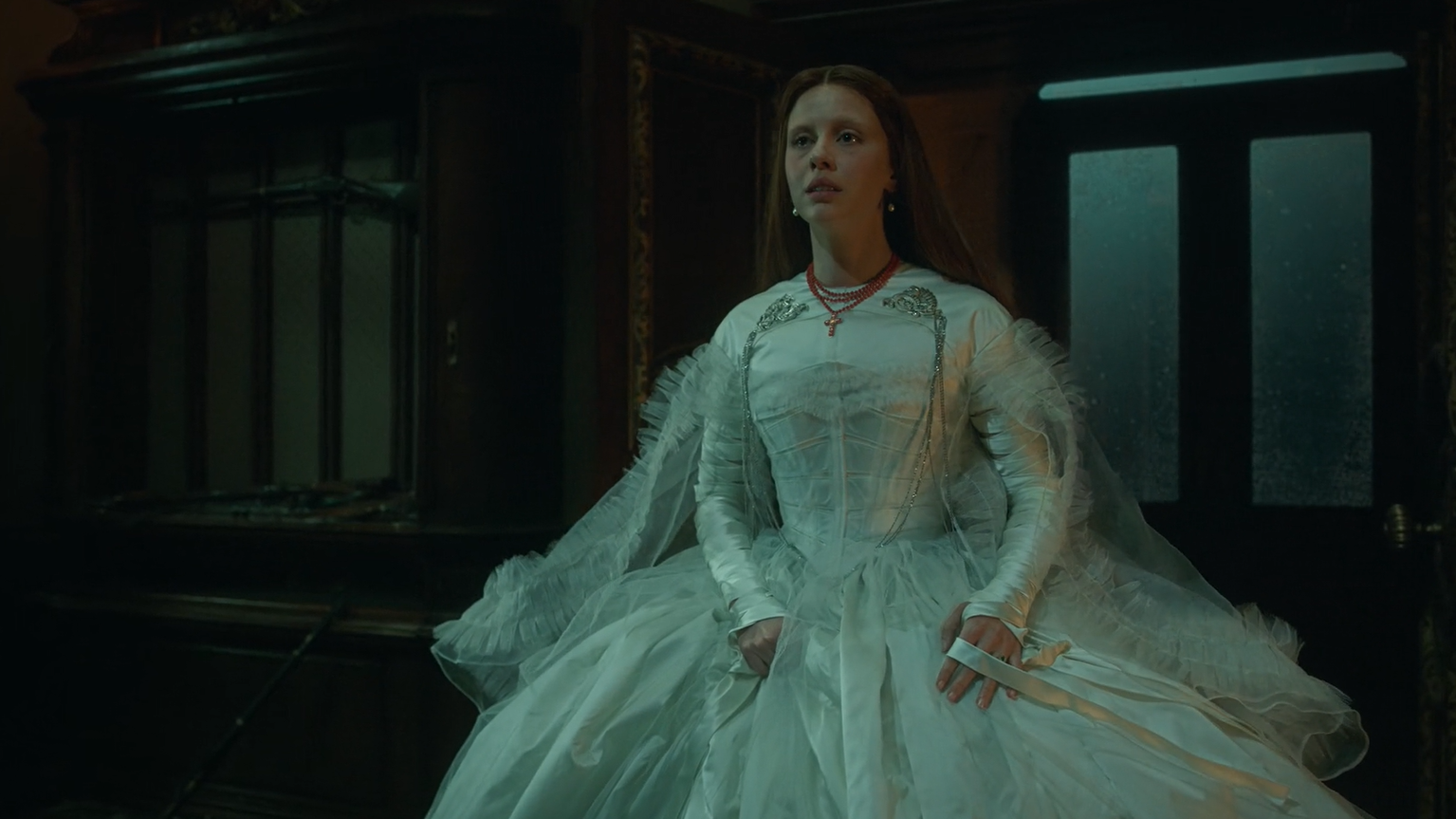
But one thing I just cannot not mention is the night gown… Del Toro’s night gowns always have this sort of surreal feel about them that makes the women look ethereal.. (Sigh) My soul that was stirred in Bridgerton has now found peace through costumes in Frankenstein.
The Accessories
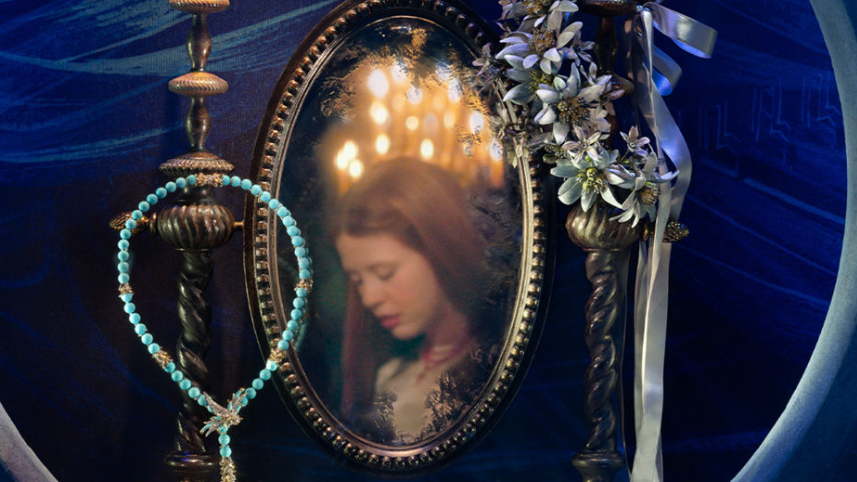
It is common knowledge that Tiffany lent jewelry to Del Toro for Frankenstein, and naturally, they are gorgeous. But what intrigues me more is the symbolism presented through the jewels themselves. The blue beetle necklace was not just the most befitting piece worn by Elizabeth, it was a very ‘in your face’ declaration of her love for insects and bugs.
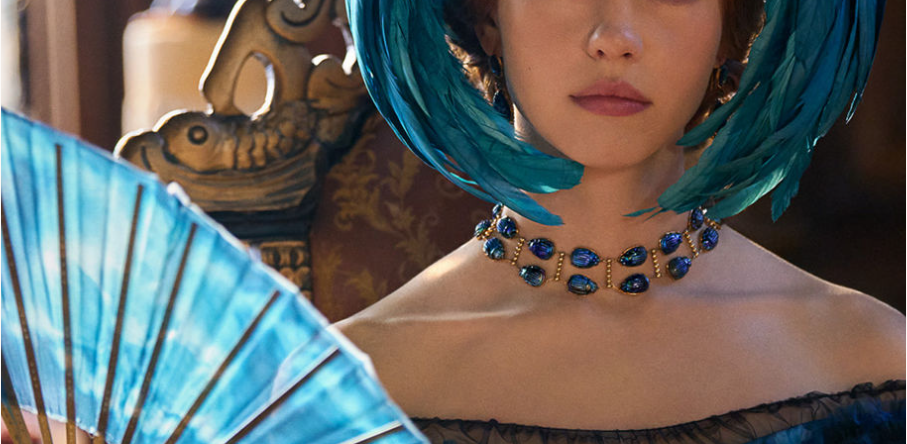
The thing is you find parallels in the grandeur of decor, mansions, and jewellery. This is very evident from the Wade Necklace worn by Elizabeth. It complements the branched designs on furniture, candlestands, pillars, etc.
The red necklace with a cross on her white wedding gown also stands out, showing again the pattern of bold innocence. Also, if you have seen the 1935 Bride of Frankenstein, you will see bandages on her wrist, which were very similar to the ribbons tied on Elizabeth’s arms! I mean, phew! That just takes you out, doesn’t it?
And let’s talk about the headgear Elizabeth wears. They are not far from what women wore in that era, but the way Hawley shows creativity with them makes you feel it’s modern. Well, what a delight it was to take it all in.
Blood, Bones and Guillermo-
The only thing I find a little unsettling is how vivid and graphic Del Toro can be while showing the surgeries on the creature. The ripping away of tendons, the fitting of eyeballs, the surgical amputations, all were a little much for me. But then again, can you blame him? It fits the narrative, and so it was shown.
Conclusion
The movie was a masterclass in colour theory and symbolism. However, I wish it could have been handled more subtly.
The story hits home, and the question of who was the monster in the end resurfaced. It also made me wonder how many kids in school simply become bullies because they are treated unfairly by teachers and misunderstood by their parents, but that could be a completely different blog.
Before I end it, there is a conspiracy theory that Victor was God, Frankenstein was Jesus, and Elizabeth represented the church, and I absolutely dig it. Let me know what you think about it.